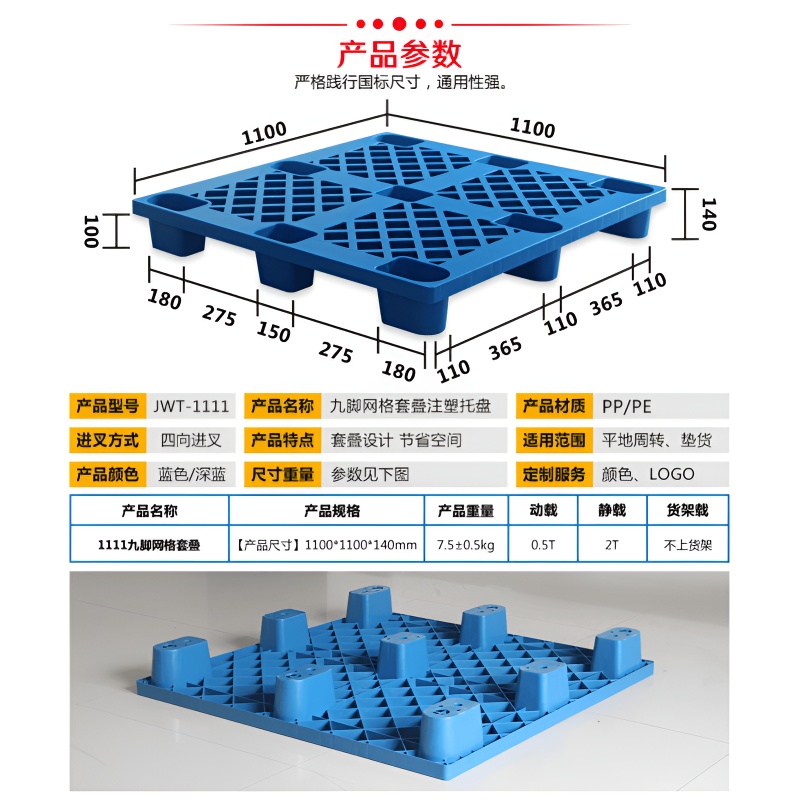
In today's world, businesses are increasingly focused on lowering their carbon footprint. Adopting plastic pallet boxes provides a pathway to significantly reduce greenhouse gas emissions. Plastic pallets are reusable, recyclable, and designed for longevity, making them an environmentally friendly alternative to traditional wooden pallets. This article explores how integrating plastic pallet boxes can lead to substantial improvements in carbon footprint reduction within logistics.
The carbon footprint refers to the total amount of greenhouse gases emitted directly or indirectly by an individual, organization, event, or product. It is typically measured in equivalent tons of CO2. Understanding your carbon footprint is vital for addressing climate change and achieving sustainability goals.
Plastic pallet boxes contribute to sustainability through several means:
Here are some numerical benefits of plastic pallet boxes:
Several companies have reported significant reductions in their carbon footprints through the adoption of plastic pallet boxes. For example:
XYZ Logistics adopted plastic pallet boxes and observed a 40% decrease in transport emissions over two years. This case demonstrates the real-world efficiency of plastic pallets.
ABC Food Distribution transitioned to plastic pallets and achieved a 60% reduction in waste produced during packaging and transport.
| Aspect | Plastic Pallet Boxes | Wood Pallet Boxes |
|---|---|---|
| Weight | 7 kg | 15 kg |
| Average Lifespan | 10 years | 3 years |
| Carbon Emissions | 50% lower | Higher emissions |
| Recyclability | 100% | Limited |
The transition to plastic pallet boxes is an essential strategy for organizations seeking to reduce their carbon footprint. Enhanced durability, recyclability, and lower transportation emissions support substantial environmental benefits. By choosing Zobonsol’s plastic pallet boxes, businesses not only optimize their logistics but are also actively participating in the global effort to combat climate change.