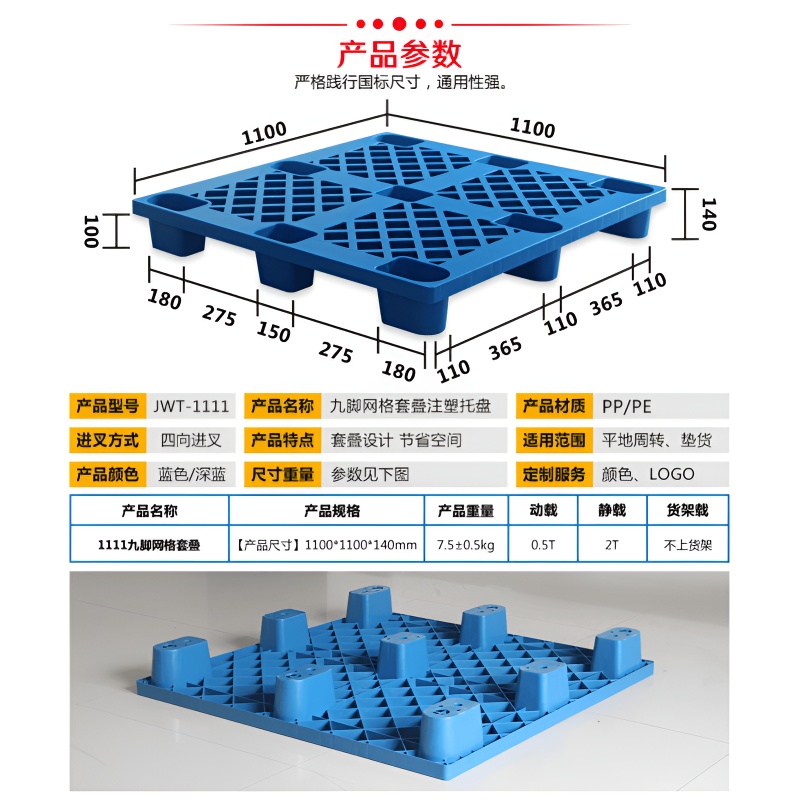
In the ever-evolving landscape of material handling, one persistent problem plaguing warehouses and distribution centers is the structural integrity of plastic pallets, especially under heavy loads. As I’ve observed in various operational environments, using standard plastic pallets for heavy racking often leads to deformation and in some cases, catastrophic failure. This isn't just an inconvenience; the repercussions ripple through the supply chain, impacting efficiency, safety, and even the bottom line. Without appropriate reinforcements, companies risk product damage, increased labor costs, and safety hazards, making the choice of pallet a strategic decision that can no longer be overlooked.
The reasons behind this issue stem from the inherent material properties of plastic. Unlike wood or metal, plastic is susceptible to bending and warping when subjected to excessive weight over time. This deformability can lead to uneven weight distribution, which not only compromises the stack stability but also increases the likelihood of pallet failure. Moreover, temperature fluctuations and exposure to specific chemicals can further weaken standard plastic materials, pushing their performance limits beyond acceptable thresholds. Understanding these causes helps underscore the essential need for incorporating steel reinforcements in plastic pallets, a move that enhances their load-bearing capacity and durability.
From an industry perspective, companies that operate in logistics and distribution are increasingly recognizing the substantial benefits that reinforced plastic pallets bring. Implementing steel reinforcements allows these pallets to withstand heavier loads without compromising their structural integrity. This translates to less downtime due to equipment failure and reduced operational disruptions, allowing for smoother processes in inventory management and fulfillment. In sectors where precision and reliability are paramount, selecting the right type of pallet can also serve as a competitive advantage, safeguarding brand reputation and enhancing operational efficiencies.
For example, a case study conducted in 2022 highlighted the positive impact of using steel-reinforced plastic pallets in a large-scale retail operation. After switching from standard plastic pallets to those enhanced with steel, the company reported a 40% reduction in product loss due to pallet failure. Additionally, their pick-and-pack cycle times improved by 30%, showcasing a direct correlation between pallet choice and operational effectiveness. This kind of data illustrates that the upfront investment in higher-quality materials can yield significant returns over time.
Neglecting to adopt reinforced pallets could expose businesses to significant risks, especially as operational demands evolve. As companies scale up and handle heavier or bulkier products, standard plastic pallets may no longer suffice, leading to increased labor costs due to more frequent replacements and potential workplace injuries. Failure to address these concerns can also result in regulatory penalties or damage claims, compounding the costs associated with outdated material handling strategies.
In conclusion, as a Plastic Pallet Manufacturer, it is crucial to embrace advancements in pallet technology like the incorporation of steel reinforcements for heavy racking applications. The urgency to invest in robust solutions cannot be overstated—doing so enhances safety, agility, and long-term profitability. I encourage industry stakeholders to evaluate their current material handling strategies and consider the move to steel-reinforced plastic pallets, such as those offered by Zobonsol. By making this shift, organizations can not only mitigate risks but also ensure scalability in an increasingly demanding market. Let's make informed choices today for a more resilient and efficient future in logistics.